
Last Saturday I attended a practice hackday for BERG’s Little Printer. Thirty or so people spent the day coming up with content for the soon to be released printer, which allows users to subscribe to and create publications that are printed whenever they choose.
It was a great day, with some super smart people and some interesting ideas for what to do with thermal paper, self-publishing and an open API. I got to work with Mark Hurrell which doesn’t actually happen that often, less still I get to dick around with a soldering iron.
##What we built
We wanted to make something that used the physical qualities of the Little Printer – it’s a connected device that prints things, the paper it uses lasts for only a few months without degrading or falling apart, and it’s tiny – it has human scale and trusted position in someone’s home.
Night Sky (aka ‘let’s sleep together’… ehm) allows you to subscribe to the night sky view of a particular place, or time, using images generated by John Walker’s Your Sky.
Because thermal paper is translucent, the picture can be slotted into a light box (like the prototype shown) to create a mini paper planetarium*.
You could choose to subscribe to you own location if, like most of the world you live in a place where the level of light pollution stops you seeing the stars. Or you could subscribe to the location of a loved one living abroad, allowing you to ‘sleep together’ under the same night sky.
If you fancied sleeping in a different city every night, you could. And because the images are auto-generated, you could travel forward or backward in time to see say, the sky Christopher Columbus would have seen when he discovered the Bahamas in October 1459, or the sky on the day when we’re predicted to have used the last barrel of oil on earth.
Over time the image will fade to black with the heat from the light, hopefully in time for your next issue of night sky.
What we learned
A printer is an intimate form of communication. It’s not like sending someone a Facebook message or an @reply that you’re at liberty to ignore. It’s an actual physical thing pushed into your actual physical space. Who or what you’ll subscribe to using your Little Printer will, I think, have a similar level of intimacy – more akin to the kind of thing you would subscribe to through email over RSS, the people you’ve met in the real world, or personal forecasts & schedules.
Nick O’Leary & Kass Schmitt made ASCII Meteogram, an ASCII art weather forecast.
Chris Heathcote, James Stewart & James Weiner. made Localondon, a London exhibition guide.
Richard Pope made a google calendar, but one that uses icons instead of words.
Roo Reynolds made a google calendar printout.
Tom Taylor made a Low Flying Rocks list of upcoming asteroid near misses.
Dam Williams made Little Emma, a publication sharing the location of the worlds largest container ship to help his understanding of food origins.
Paper is an ephemeral form of communication. It’s is exempt from our everyday digital filing systems, or the kind of ‘I’ll just search for it in my inbox’ information security we rely on. Receipts are at the extreme end of this. They turn yellow in the sun and black next to heat. They also have the uncanny ability to be crushed into tiny, anonymous balls of bag fluff at any moment.
Although the little printer’s content isn’t a receipt, it’s form carries with it the memory of it’s former function, that’s part of its charm. But that function doesn’t come without baggage – will I want to be seen to read a receipt on the tube? Will I be able to take my printout anywhere further than my fridge door without it joining my sediment party in my handbag? It’ll be interesting to find out.
Adrian McEwan made some buttons for a fridge door that you can press when you need more milk, and then prints a shopping list.
Chris Adams made Little Printnik, a sort of ‘word of the day’ game to expand vocabulary.
Matt Webb made a Conway’s Game of Life that printed out a new iteration every day.
Delvin Hunt & Ben Firshman made cute little origami animals.
Paper is dead. It might seem obvious, but it’s easy to forget that anything you print is inherently in the past. Fine if you want to produce something that is immortal anyway, like a book, not so fine when you want to print the internet. Most live data publications that came out of the day were summary based ‘almanacs’ of the day or weeks events rather than notifications of time critical information.
Nat Buckley & Linda Savik made Catgrindr, which prints out photos of cute cats near you.
Matt Biddulph. made Little Twitter Trends, a summary of what happened to people you follow on twitter.
James Wheare made an Exquisite Tweets style thing, so you can get a daily printout of interesting twitter conversations.
Simon Willison, Natalie Downe. & Tom Insam (aka team Lanyrd). made a little Lanyrd document, with maps and event times.
Tom Armatige made a Tower Bridge opening/closing times list, but with pictures and facts, like a little I-Spy book.
Thanks to Dan Williams for the list of the day’s projects.
 This Friday, thousands of people (myself included) were left without cellular and data services when O2 went down.
 Light and water move in very similar ways. It’s not surprising then that the methods we use to control them are often similar.
 Who can tell which came first, Derek Downey’s beard or his job as the warden of the Davis Bee Sanctuary in California, but I’ve seen this kind of thing before.
 I’ve been spending a lot of time at the London Fields Lido this week. Some long overdue downtime between projects, not just because I have a not-so-secret ambition to live the life of a Miami pensioner.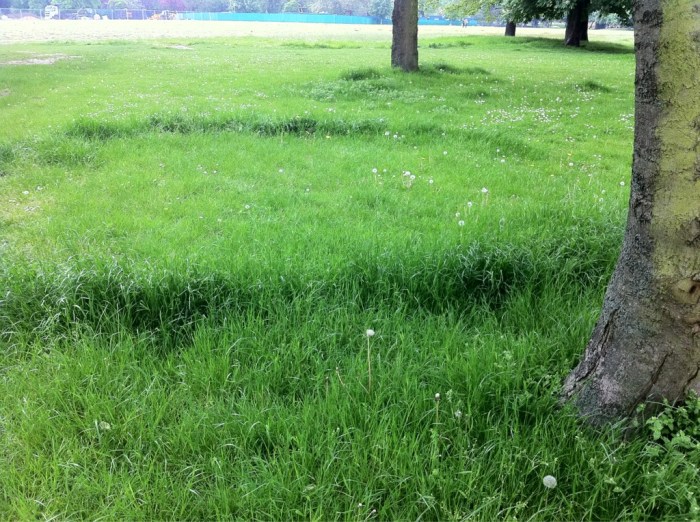
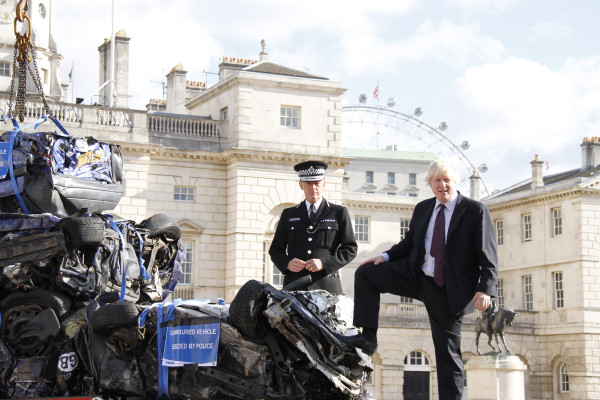
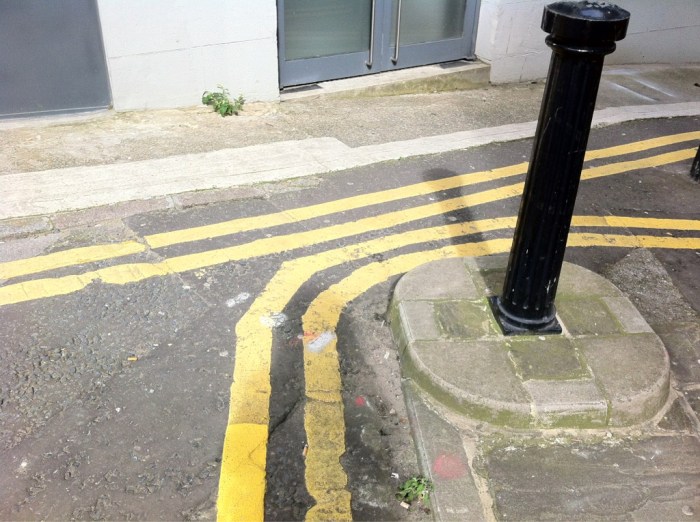 Self replicating systems will always have a point of compromise. Our legal systems are adaptive to precedent, what would happen if the expression of those legal systems, like road signs for example, were as adaptive?
 Lou Downe