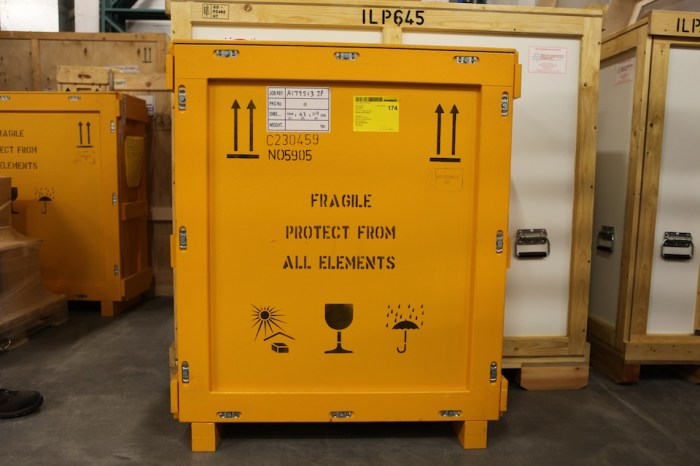
 Built to with withstand temperatures down to -40 degrees, these boxes are used to store and transport works on loan from Tate’s collection to hundreds of galleries around the world.
Each box is made to measure by Tate’s art technicians, and is so airtight that the work inside can take up to 4 days to reach the ambient temperature and humidity of the outside air. The boxes are even lined with a sound resistant foam to protect the work inside from the rumble of a long transatlantic cargo journey.
As it is, they’re almost perfectly equipped for a long voyage, but these boxes have one more trick to withstand mistreatment, they’re bright yellow.
“We started painting them this colour so we could see them in the cargo depot”, one Art Handler told me “then the warehouse staff started noticing the boxes, and would take special care of them because they looked so nice”
If an artwork is fragile, a Conservation Scientist from Tate will travel with it on a chartered cargo plane, but artworks often fly solo and can spend several hours in a baking hot or unheated warehouse whilst they await collection. These boxes might be tough enough to rough it out, but they also go beyond looking after themselves, they demand be looked after by others.
Its easy to think of packaging as a disguise, or protection for its contents, whether thats a packing crate or a mobile wallet, but revealing the vulnerabilities of an object, service or product can make clear that care is needed to look after it.
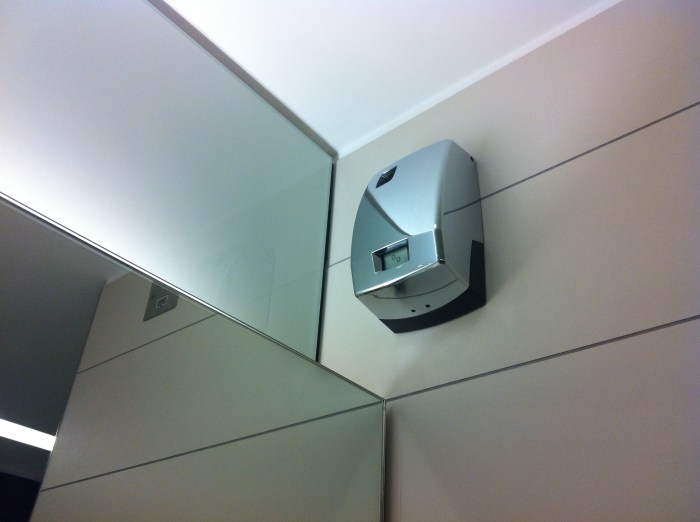 We can identify objects which might be intelligent and which ones probably aren’t based on whether or not they can talk. A screen is a mouth, it can say anything in a way that a button cant.
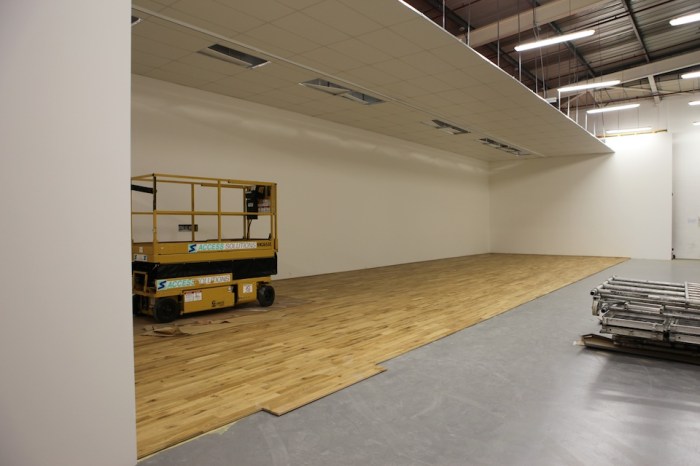 What do you do when you have a collection of over 60,000 objects, a gallery space that’s open 7 days a week and a new exhibition to plan?
 Lou Downe